
"1960s coffee production"
300 article(s) found

A brief description of the flavor, taste and aroma characteristics of boutique coffee beans in Jensen Manor, Panama.
Although the Rosa Variety was planted a few years ago, Kaduai was used in all the batches of the BOP competition and achieved good results, closely following the Emerald Manor in the number of winners. Thus it can be seen that the production of high-quality coffee in Panama is closely related to its unique geographical advantages. At the same time, the fine operation of the manor harvest and processing link determines the raw beans.

A brief introduction to the grinding degree and roasting degree of Panama Jensen Estate coffee beans
Panama Emerald Estate Esmeralda Specialty is a rare award-winning estate bean that has set a new record three times at online auction. June 2004,$21 a pound, May 2006,$50.25 a pound, May 2007,$130 a pound, May 2010,$170 a pound.

A brief introduction to the market price of boutique coffee beans at Jensen Manor in Panama
Every time Cat Ye writes these bean reviews, he always comes with the same cup of coffee, but this cup of rosy summer is really a cup of beans that people can't bear to drink too quickly, because every time I drink it, I always wonder if I won't be able to drink this kind of coffee one day, and how to go on with my life. With so many beans recommended, this one is the least in stock but the most worthy of the cat.

The cultivation of boutique coffee beans at Jensen Manor in Panama the geographical location, climate and altitude are simple.
Lion grows in the Panamanian plateau at an altitude of 1700 meters above sea level. The harvest is from January to March every year, and it usually takes about August to reach the hands of domestic buyers. Using the method of washing, it has a very strong aroma of jasmine and apricot, sweet fruit and warm fruit. After sipping, it has a very obvious flavor of sweet peach, red berry, passion fruit and rose apple sugar.

Treatment of Starbucks Uganda Coffee beans
The way Starbucks treats Ugandan coffee beans Uganda produces one of the highest coffee production in Africa, accounting for more than 70% of its total exports. In the 1960s, Ugandan coffee production remained at 3.5 million bags a year. By the mid-1980s, coffee production had dropped to 2.5 million bags a year, mainly for political reasons. But now coffee production is on the rise again, currently about 3 million bags a year.
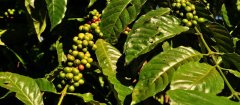
Ugandan coffee boutique coffee single black coffee
In Uganda (Uganda), Arabica coffee beans account for only 10 per cent of the country's total coffee production, but it is enough to attract attention. Uganda's best coffee is mainly produced in the mountains of Elgon and Bugisu along the Kenyan border in the north and Ruwensori in the west, and is available for export in January or February of each year. Red

Introduction of coffee, coffee and bean producing countries in Uganda
In Uganda (Uganda), Arabica coffee beans account for only 10 per cent of the country's total coffee production, but it is enough to attract attention. Uganda's best coffee is mainly produced in the mountains of Elgon and Bugisu along the Kenyan border in the north and Ruwensori in the west, and is available for export in January or February of each year. Red

Introduction to the Origin of Ugandan Coffee Flavor and Taste
The equator crosses Uganda and the suitable climate makes it the main producer of robusta coffee beans in the world. In the 1960s, Ugandan coffee production remained at 3.5 million bags a year. By the mid-1980s, coffee production had dropped to 250 bags a year, mainly for political reasons. But now coffee production is on the rise again, currently about 3 million bags a year. What the coffee industry is facing

How does El Salvador's Mount Wula Manor drink Coffee? description of its taste and flavor
Professional coffee knowledge exchange more coffee bean information please follow the coffee workshop (Wechat official account cafe_style)

Indonesia's "charcoal coffee" has become a tourist highlight.
Following Cafe Review (Wechat official account vdailycom) found that Beautiful Cafe opened a small shop of its own. When it comes to charcoal-roasted coffee, coffee lovers must be no stranger. If you travel to Yogyakarta, Indonesia, try the charcoal coffee there, because the store will really throw a piece of hot charcoal into the coffee. According to the US funny news website oddity central, this


How to drink Ugandan coffee beans?
Uganda is one of Africa's leading coffee producers, accounting for more than 70% of its total exports, while Uganda is also the home and major producer of Robbs specialty coffee. In the 1960s Uganda's coffee production remained at 3.5 million bags per year. By the mid-1980s, largely for political reasons, coffee production had fallen to 2.5 million bags a year. But coffee production is on the rise again, and it's big now.

International Coffee Organization
International Coffee Organization during the 19th century, coffee became an important international trade because of the large number of demand. It makes most countries earn foreign exchange from coffee export trade as a source of money income for farmers and is an important trade in most countries. Because the split led to changes in prices and product standards, it ended at a conference in New York in 1962.

2019 New season Guatemala Linda Vista Manor Black Honey processed Fine Coffee
Coffee workshop (Wechat official account cafe_style) the coffee industry in Guatemala originated in the 1850s, when coffee was mixed with cochineal worms, and small plantations were scattered across southwestern Guatemala, when coffee grew slowly due to lack of knowledge and technology. In the early days, many coffee farmers relied on home.

Colombia Santander production area rose summer coffee bean cultivation situation rose summer
Professional coffee knowledge exchange More coffee bean information Please pay attention to coffee workshop (Weixin Official Accounts cafe_style) Northeast of Colombia near the Pacific Ocean Santander Mountain Coffee is planted in the virgin forest at an altitude of 42005500 feet. The soil is fertile and humid, and the temperature difference varies greatly. In addition, there is a good shade environment in the virgin forest, which provides the best conditions for coffee growth. Except
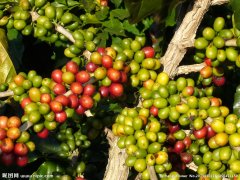
The production of Ugandan Arabica coffee beans accounts for only 10% of the country's total coffee production.
In Uganda (Uganda), Arabica coffee beans account for only 10 per cent of the country's total coffee production, but it is enough to attract attention. The best coffee in Uganda is mainly produced in the mountains of Elgon and Bugisu along the Kenyan border in the north and Ruwensori in the west. Coffee is served in January or February of each year.

Have you thought about how climate change will affect coffee farming?
Weixin Official Accounts vdailycom found that by the end of the century, climate change could make about half of Ethiopia's coffee-growing areas unsuitable for coffee cultivation; however, the study is not all bad news, and the authors suggest that the total area of coffee cultivation is expected to quadruple through coffee-growing area relocation, afforestation and forest protection
Name of the producing country of the International Coffee Organization
International Coffee Organization during the 19th century, coffee became an important international trade because of the large number of demand. It makes most countries earn foreign exchange from coffee export trade as a source of money income for farmers and is an important trade in most countries. Because the split led to changes in prices and product standards, it ended at a conference in New York in 1962.

Introduction of Panamanian Geisha Rosa Coffee Flavor description Grinding scale Variety production area treatment method
Panamanian Geisha Rosa Coffee Flavor description Grinding scale Variety Regional treatment method Gesha as one of 77 natural villages in the south of Ethiopia, like other natural villages, the original residents here live a life of sunrise and sunset. Rose Xia was born in a barren valley and lived a natural and mundane life. But she inherited the oranges unique to Essex coffee.

What is the uniqueness of Colombian coffee? Colombian coffee and its
The Colombian Coffee producers Association (Federacion Nacional de Cafeteos de Clolmbia), known as [FNC] for short in the industry, introduced the two main varieties of Colombian coffee, Kaddura and Colombia. Kaddura, which was introduced from Brazil in the 1960s, now accounts for 45-50% of the country's output and has replaced the earliest Tibica. A new breed with the same name as Colombia [Columby]